Nura Hossainzadeh, Ph.D.

Data researcher with a diverse background in data science, political philosophy, and the humanities.
About Me
View My Resume
View My LinkedIn Profile
About Me
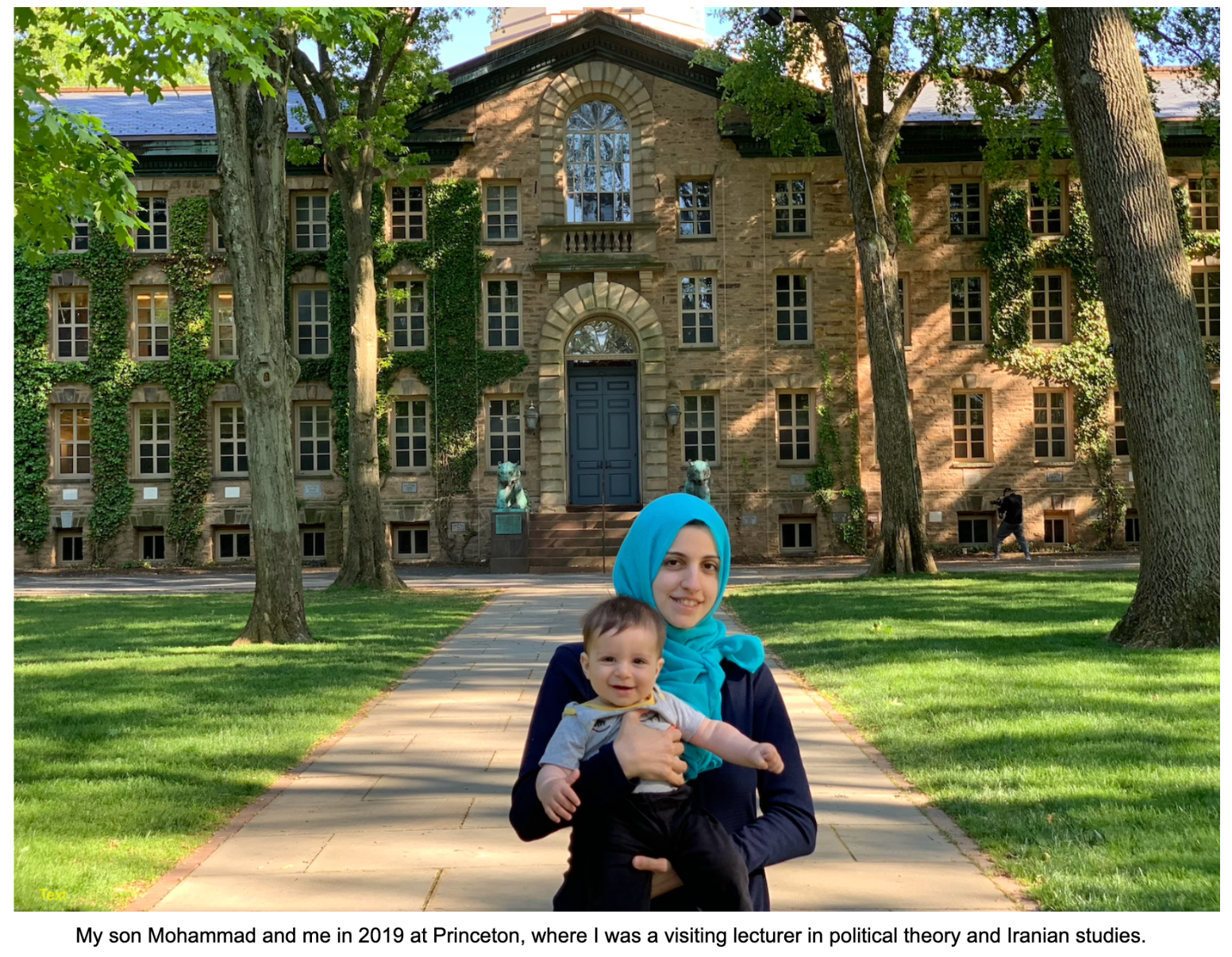
I am currently a student in the Master of Information and Data Science program at UC Berkeley. My path to data science is somewhat unconventional. With a Ph.D. in political science (also from Berkeley), I spent many years in academia, teaching a wide range of topics in the humanities—political theory, Islamic and Iranian political thought, and the “great books” of human history. My research and publications focused on comparative political theory, a relatively new field that engages with traditions outside the Western canon.
I loved (and still love) thinking about how thinkers around the world addressed questions such as: Who are we, as humans, by nature? How do we determine what is “natural” about us? What political institutions best suit us for who we are? What is a just government? How do we balance individual rights with collective flourishing?
Many theorists throughout history have offered answers to these questions, and I engaged with the cogency and convincingness of their arguments and built from their insights. But this exercise always seemed mostly detached from the real world. While theorists often made pronouncements about the world, they didn’t always have access to the data that could help them to comprehend it separate and apart from their experience of it. The French feminist Simone de Beauvoir, for example, theorized femininity and motherhood based on her interactions with and observations of women and mothers in her society. What if Beauvoir could have accessed and studied data that gave her a fuller picture of the experiences of women in modern society?
Of course, studying the world through the lens of data often gives us an imperfect and incomplete picture of the world. We can never look at the world apart from our biases, and these biases impact how we collect and interpret data. And when we have millions of data points, we can be fooled by the sheer immensity of our research material to think that we have gained insight into the world. But even when we think we have mapped out the world around us with data points, we can in fact be tunnel-visioned, since any dataset that we collect at a given place and point in time is impacted in millions of different ways by the world around it–and we often don’t see these connections.
Though it can be partial and misleading, the world of data, approached with a critical eye, can give us some valuable insight. For instance, studies on postpartum depression or the career impacts of maternity leave could have broadened Beauvoir’s understanding of motherhood and gender inequality.
My shift to data science was driven by an interest in supplementing my knowledge of political theory with a more empirical focus. I aim to look at the world in both ways–as a poltiical theorist and as a data scientist. And my work often bridges theory and empirical analysis—-for example, a statistical study of how political party identity correlates with perceptions of voting difficulty, and a research proposal exploring racial bias in the medical field, particularly during childbirth.
My background in political theory continues to shape how I approach data. At its core, data science is about asking good questions—-and I’ve spent years studying the questions that have preoccupied political thinkers for centuries. A political theorist, for example, might be familiar with postcolonial theory and racial politics, and with the questions that scholars in these fields have asked about how violence, racism, and postcoloniality are connected to one another. A researcher familiar with these questions can pose them in particular contexts, collecting and studying data on violence committed against the colonized or underrepresented in these contexts. For example, do medical providers often commit verbal “violence” against women of color when they are in their most vulnerable state–-about to give birth? This question could be explored fruitfully in a data science project (and I wrote a proposal for this project, posted on this website).
I’ve found that my background in the humanities and in political theory has not only been helpful in the early stage of formulating a question, but throughout my data research projects. Just as I questioned the assumptions of the philosophers I read, I question the assumptions of data science projects I pursue. In a project on violence and racism in the birthing room, are we assuming that all hospitals offer similar training for their medical practitioners on bedside manner? Are we assuming that all women of color will be treated the same way, no matter their particular racial background?
And just as I critique the conclusions of the philosophers I read as a political theorist, I critique the cogency of my own conclusions when doing data research. If we find that women of color say more often than white women that they have been subjected to violence in the birthing room, how do we prove that they are not imagining it, rather than actually experiencing it?
For me, a turn to data science was a logical “next step” in my study of the political and social world. I use the skills and tools I have learned as a data scientist-–in programming, in statistics, in machine learning, in data engineering–-and I draw on my knowledge of the history of humanistic thought to make sense of all the data we have recently found ourselves able to generate and study. In my career, I aim to bring together humanistic and technical knowledge to look through this newly-opened empirical window on the world, to see the world in new ways, and to envision ways that we can change it for the better.